
Buying a home is a major financial decision, and one of the most important parts of the process is knowing how to communicate with real-estate agents and how to approach the bidding process. Whether you have just started looking at properties or have already found a home that you are seriously interested in, clear communication and careful preparation can make a significant difference.
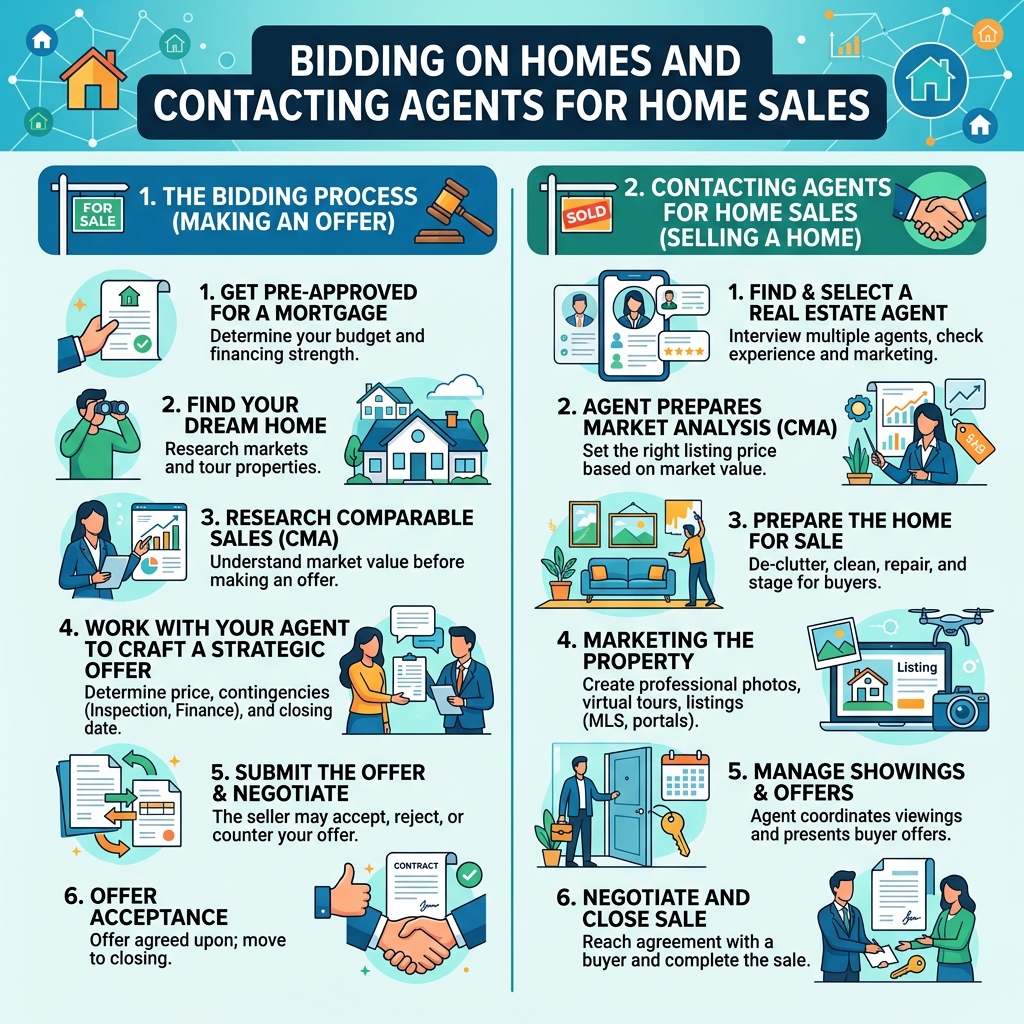
When contacting an agent about a property, it is usually best to be direct and polite. You can introduce yourself, mention the property you are interested in, and explain that you would like to arrange a viewing or receive additional information. There is no need to immediately reveal your maximum budget or the highest amount you would be willing to pay. Keeping some information private gives you more flexibility later if negotiations take place.
Before making an offer, it is important to research the property and understand the local market. Look at comparable homes in the same neighborhood and consider their size, condition, location, age, and recent selling prices. The asking price does not necessarily represent the actual market value of the property. A home that has been on the market for a long time may provide more room for negotiation, while a desirable property receiving multiple offers may require a more competitive bid.
A viewing is also an important opportunity to gather information. Pay attention not only to the appearance of the home but also to its condition. Look for signs of moisture, cracks, poor insulation, old electrical installations, plumbing problems, roof issues, or other expensive repairs. Ask the agent about renovations, maintenance, energy efficiency, monthly costs, and anything else that could affect the property’s long-term value.
If you decide that you want the property, the next step is usually to determine your bidding strategy. Start by establishing the maximum amount you are genuinely comfortable paying. This should be based on your finances rather than emotions. It is easy to become attached to a home and gradually increase your offer because you are afraid of losing it. Setting a firm upper limit beforehand can help prevent you from paying more than you originally intended.
Your first offer does not necessarily have to be your maximum offer. Depending on the market and the circumstances of the property, you may decide to make a reasonable initial bid and leave some room for negotiation. However, making an unrealistically low offer can also be counterproductive, particularly when there are several interested buyers.
When submitting an offer, the price is only one part of the negotiation. Other conditions can also matter. The proposed completion date, financing arrangements, included appliances or furniture, inspection conditions, and other contractual terms can influence whether a seller accepts an offer. A slightly lower offer with attractive and reliable conditions may sometimes be preferable to a higher offer that comes with significant uncertainty.
Communication with the agent should remain professional throughout the process. If you have questions, ask them clearly and preferably keep important agreements in writing. Do not hesitate to request clarification if the agent uses terminology or contractual language that you do not understand. Buying a property involves substantial amounts of money, so it is reasonable to take your time before agreeing to something significant.
If the agent tells you that another buyer has made a higher offer, do not automatically assume that you need to match it. Consider whether the property is still worth the increased price to you. Agents may communicate information about competing offers, but you should make decisions based on your own financial limits and assessment of the property.
Negotiation can involve several rounds. The seller may reject your initial offer, make a counteroffer, or ask you to improve certain conditions. You can accept the counteroffer, make another proposal, or walk away. Walking away is sometimes the best decision. There will always be other properties, and paying too much for a home simply because negotiations have become competitive can create financial pressure for many years.
When contacting an agent after making an offer, it is useful to be concise. You can confirm the amount you are offering, state any important conditions, and indicate that you are prepared to proceed if the seller accepts. Avoid making statements that unnecessarily reveal how emotionally invested you are in the property.
For example, instead of saying that the property is your dream home and that you would do almost anything to get it, you can simply communicate that you are seriously interested and prepared to proceed with the purchase under the proposed terms. This keeps the conversation professional and avoids giving away unnecessary negotiating leverage.
If your offer is rejected, ask whether the seller has provided a reason or whether there is room for another offer. Sometimes the seller may simply be looking for a higher price. In other situations, they may have accepted another offer. If the property remains available, you can decide whether submitting a revised offer makes sense.
It is also important to distinguish between an informal indication of interest and a legally binding offer. The exact rules vary depending on the country and the type of transaction. Before making a binding commitment, understand what you are agreeing to, what conditions apply, and what consequences may exist if the purchase does not proceed.
A real-estate agent represents the interests of the seller, buyer, or both depending on the arrangement and local regulations. Because of this, you should not assume that the agent is acting as your personal financial or legal adviser. For significant transactions, it can be sensible to consult an independent lawyer, notary, surveyor, or financial adviser.
If you are selling a home rather than buying one, the same principles apply from the opposite perspective. A seller should consider the strength of each offer rather than focusing exclusively on the highest number. A buyer who has financing already arranged and can complete the transaction quickly may represent less risk than a buyer offering slightly more but with uncertain financing.
When selling, responding to potential buyers promptly can also help maintain momentum. If someone contacts the agent with questions or expresses interest, providing accurate information and arranging viewings efficiently can increase the likelihood of receiving serious offers. At the same time, sellers should avoid creating artificial urgency or making unsupported claims about competing buyers.
Whether you are buying or selling, the most effective approach is generally to remain calm, informed, and realistic. The goal of negotiation is not simply to win against the other party. It is to reach an agreement that makes financial and practical sense for everyone involved.
Ultimately, buying a home should be approached as a financial and legal transaction rather than an emotional competition. Research the property, understand its market value, determine your financial limits, communicate clearly with the agent, and avoid allowing pressure or fear of missing out to dictate your decisions. A good property can be worth pursuing, but it should still be purchased at a price and under conditions that make sense for you.